What to Do During a Plumbing Emergency in Phoenix
Shut off the water, kill the power, and protect your floors. Here is the exact order Phoenix homeowners should follow when a pipe bursts or a drain backs up.
Shut off your home's main water valve first, then cut power to any flooded area, then call a licensed plumber. Those three moves in that order stop the majority of the damage in a Phoenix plumbing emergency, and everything else - mopping, photos, insurance calls - comes after the water stops moving. What to do during a plumbing emergency Phoenix AZ homeowners face is really a sequence, not a scramble, and the sequence is short enough to memorize. Below is the exact order we walk Phoenix customers through on the phone, plus the local details that make our emergencies different from anywhere else.
The First 60 Seconds: Shut Off the Water
Water damage in a Phoenix home compounds fast - a half-inch supply line spraying at 40 PSI can dump 8 to 10 gallons a minute into a laundry room, which is 500 gallons an hour. That is why the first step is always the same: stop the supply.
If the leak is at a fixture, shut the angle stop under the sink or behind the toilet - turn it clockwise until it stops. If you cannot find a fixture valve or the water is coming from a wall, ceiling, or slab, go straight to the main shut-off. Do not stand and diagnose. Shut it down, then figure out what happened.
Two things worth knowing before you ever need them: where your main valve is, and whether it still turns. Valves that have not been exercised in five years often seize, and a seized valve turns a 20-minute repair into a 2-hour one.
How Do I Shut Off My Water Main in Phoenix, Arizona?
Most Phoenix homes have the main shut-off at the front of the property near the street, inside a concrete or green plastic box sometimes labeled "water" - that is the city meter valve, and it usually needs a meter key or a long flathead screwdriver. The valve you want for a fast emergency is the homeowner's valve, typically a gate or ball valve on the pipe between the meter box and the house.
Turn it clockwise until it stops. A ball valve handle should rotate a quarter turn; a round gate valve wheel takes several full turns. If the water does not stop, the city meter valve is your backup - Phoenix Water can shut it at the curb, but that call takes time you may not have.
Homes built before 1990 often have the main inside the garage, under the water heater platform, or in a front-yard hose bib closet. If you are in an older central Phoenix neighborhood, walk the perimeter once this week and confirm yours. We get called to plenty of plumbing services Willo Historic District AZ homes where the shut-off is behind a painted-over access panel from the 1940s, and finding it in the dark during a leak is not a good time to learn.
Step 2: Kill the Power Before You Touch the Water
Electricity and standing water are the real danger in a plumbing emergency, not the water itself. If water is anywhere near outlets, a water heater, a dishwasher, a washing machine, or a pool pump, go to your breaker panel and switch off those circuits before you wade in.
If the panel itself is in a wet area, do not touch it. Call an electrician or the utility and keep everyone out of the room. A burst pipe is a repair; an electrical shock in standing water is an emergency room visit.
Once the power is off, unplug nothing. Leave appliances where they are and let them dry out. Pulling a wet cord out of a wet outlet is how people get hurt.
Step 3: Contain the Damage and Document Everything
Containment and documentation are what turn a $4,000 insurance claim into a $900 repair. Once the water is off and the power is cut, do these in order:
- Pull towels, rugs, and anything absorbent to the edge of the water and push water toward a floor drain or out a door.
- Move furniture, electronics, and cardboard off the wet floor. Cardboard wicks water into walls.
- Photograph and video everything - the source, the puddle, the baseboards, the underside of cabinets. Timestamped phone photos are what adjusters want.
- Run fans and a dehumidifier if you have them. Phoenix's single-digit humidity helps here; a wet floor in July can dry in a day, but a wet wall cavity will not.
- Do not run the HVAC if the air handler or ductwork got wet. You will spread moisture through the house.
If you have a wet/dry shop vac, use it. If you do not, a push broom moves more water than a mop in less time.
What to Do When Pipes Burst in Phoenix
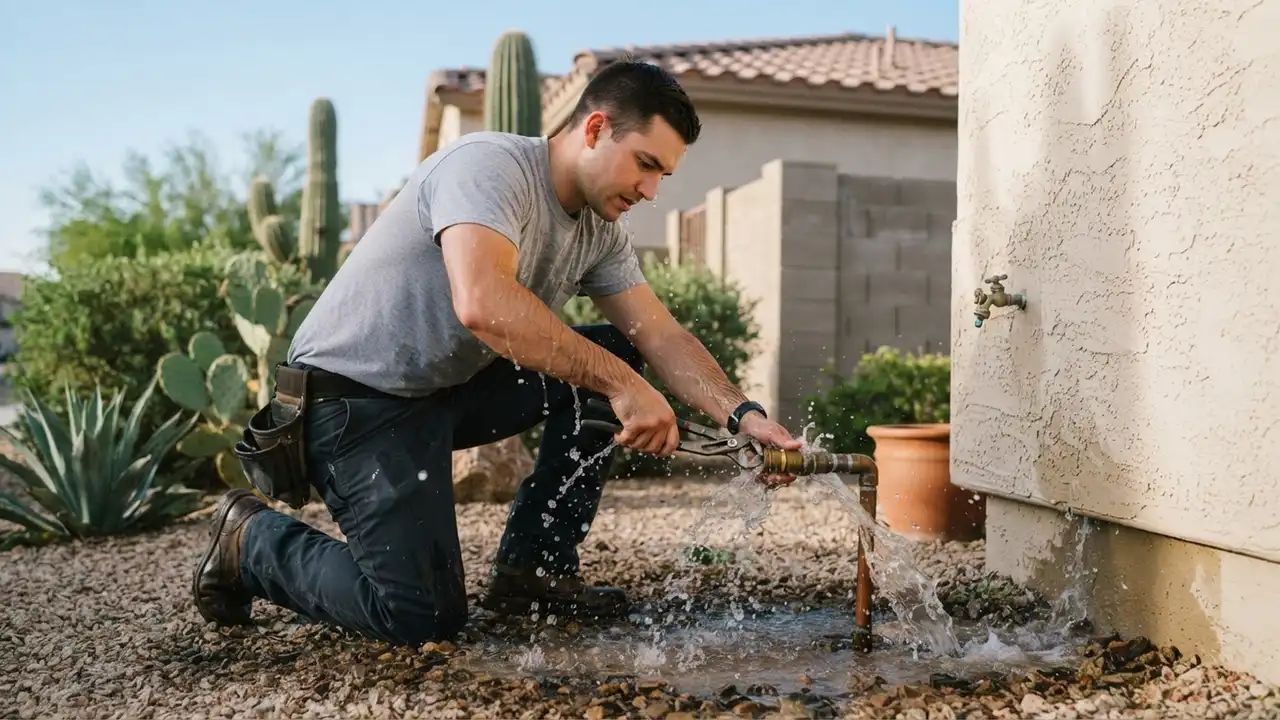
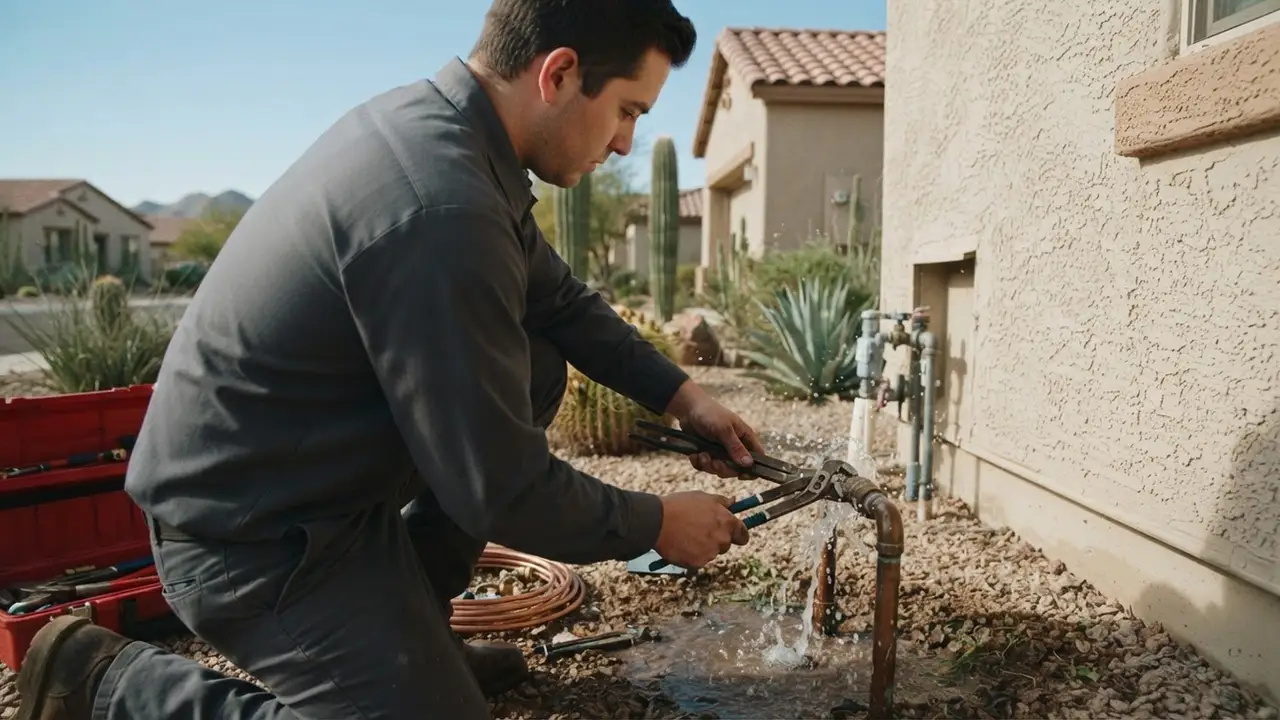
What to do when pipes burst Phoenix is a slightly different playbook than a slow leak, because a burst line can release hundreds of gallons before you get the main closed. Shut the main first, then open the lowest faucet in the house - usually a hose bib or a downstairs tub - to drain the remaining pressure and give the water somewhere to go besides your drywall.
Phoenix pipes burst for three reasons we see constantly:
- Heat and UV. Exposed copper and CPVC on a west-facing wall or in an attic can hit 140°F in July. Sun-baked CPVC gets brittle and splits at fittings.
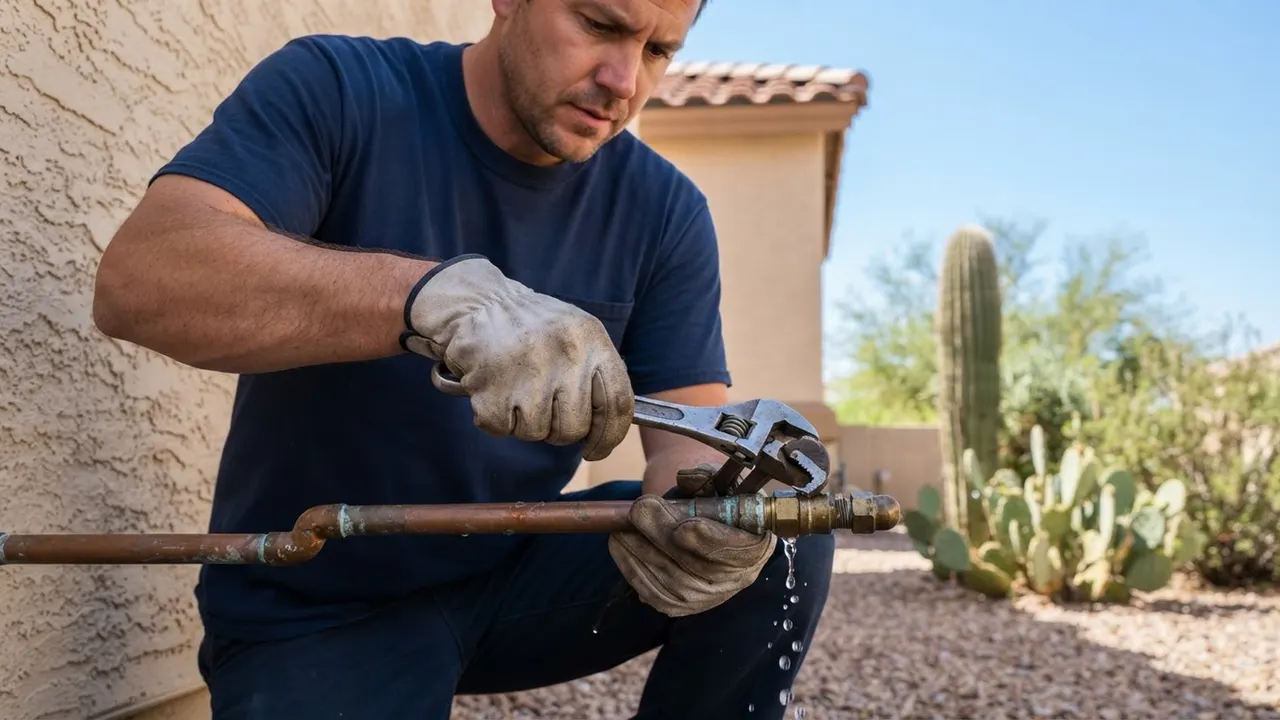
- Hard water scale. Phoenix water runs 12 to 18 grains per gallon. Scale builds inside copper until the wall thins and pinholes at a 90° elbow.
- Winter freezes. Yes, in Phoenix. A January night at 28°F in Ahwatukee or the outer East Valley will split an uninsulated hose bib or a backflow preventer, and you will not know until it thaws and sprays.
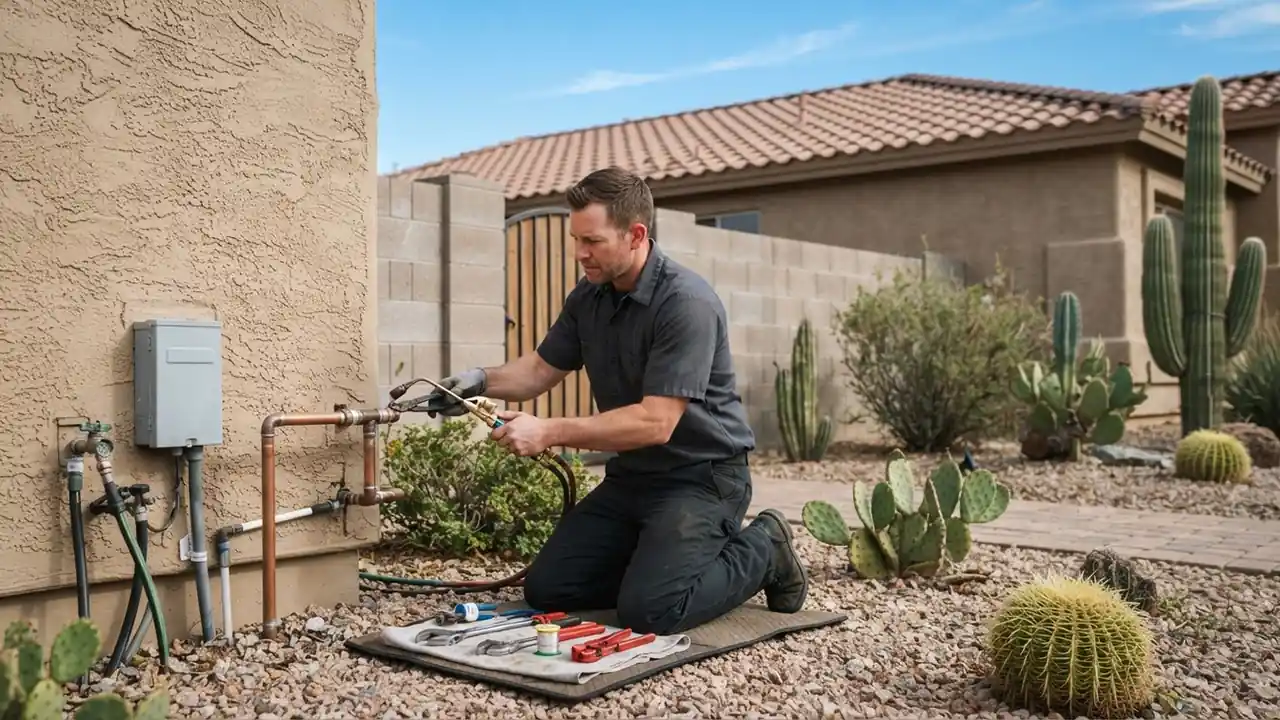
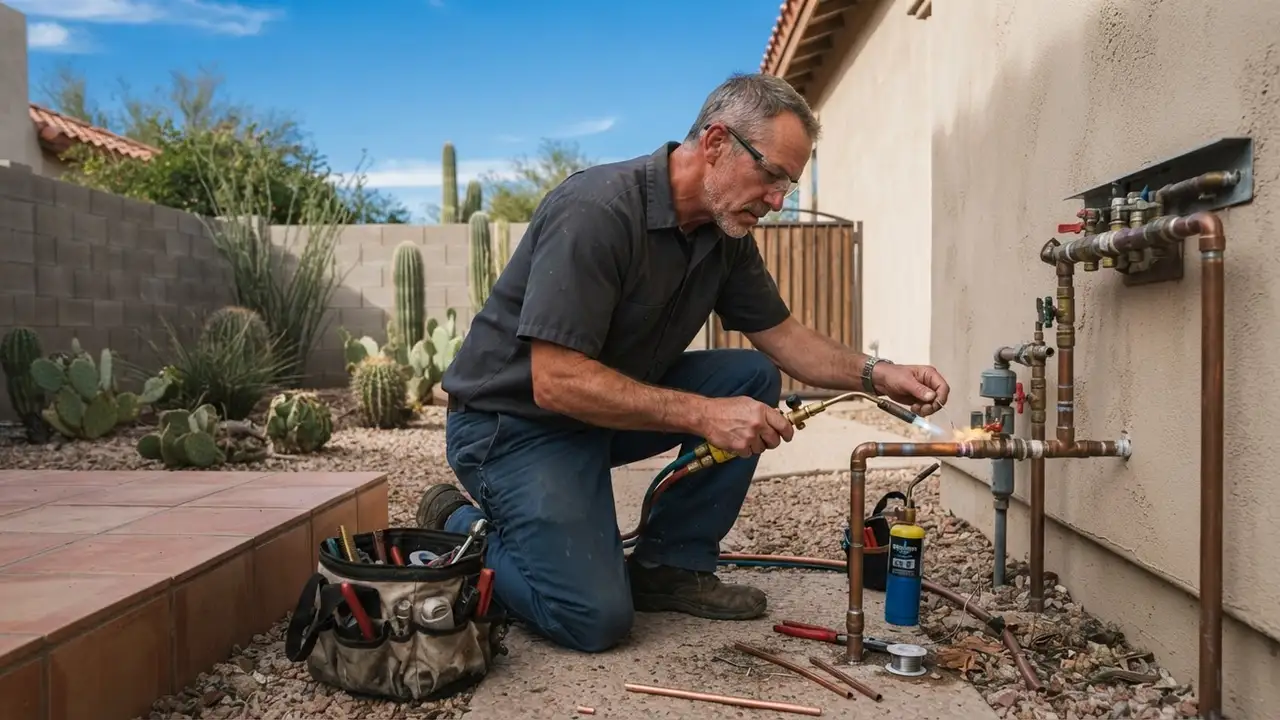
If the burst is inside a wall, shut the main and leave the wall closed. Cutting drywall yourself to "find it" usually creates more repair work than it saves. Our team handles burst pipe repair Phoenix AZ with leak detection first so we open one small section, not the whole wall.
Common Mistakes Phoenix Homeowners Make
The most expensive plumbing emergency mistakes are the ones made in the first ten minutes, before a plumber is even called. Here is what we see on arrival, over and over.
- Running water to "flush it through." If a drain is backing up, running more water adds volume to a line that is already full. Stop using every fixture on that branch.
- Pouring chemical drain cleaner. It rarely clears a main-line clog, and it turns a routine drain cleaning Phoenix AZ into a caustic hazmat situation for whoever opens the cleanout.
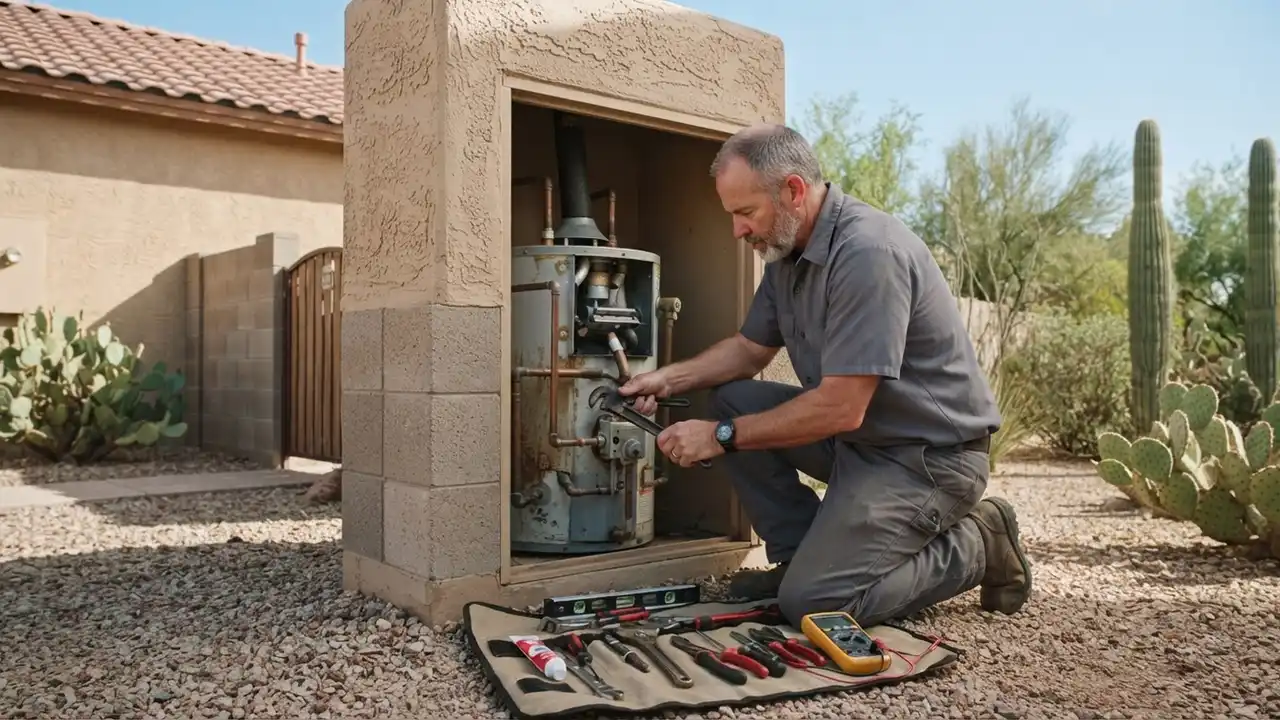
- Ignoring the water heater. A popping, rumbling tank with rusty water is telling you the anode rod is gone and the tank is on borrowed time. Waiting means 40 to 60 gallons on the floor.
- Resetting a tripped breaker on a wet circuit. If a breaker trips during a leak, it did its job. Find the water first.
- Not knowing where the main is. This is the single most common reason a small leak becomes a $6,000 floor replacement.
One more: do not assume a slab leak in a 1970s ranch home is a supply line. In central Phoenix, it is just as often a cast iron drain line that has finally rusted through. leak detection Phoenix AZ with acoustic and thermal gear tells us which one before we cut concrete.
When to Call a Professional
Call a licensed plumber the moment water is coming from a wall, ceiling, slab, or the main line itself - those are not homeowner repairs. Also call if the main valve will not close, if you smell gas, or if a drain backs up in more than one fixture at the same time, which points to a main-line blockage.
Gas is its own category. If you smell rotten eggs near a water heater, furnace, or range, leave the house, do not flip switches, and call Southwest Gas from outside. Then call us for gas leak repair Phoenix AZ once the utility has made the scene safe.
Phoenix On Call Plumbing is a state-licensed plumbing contractor serving the metro since the days when most of our customers still had galvanized supply lines. We find the leak, fix it, and test the line before we leave. You get upfront pricing before we start, and we answer the phone at 2 a.m. in July the same way we do at 10 a.m. in January.
How Can I Prevent Plumbing Emergencies in Phoenix?
Prevention in Phoenix comes down to three things: managing heat, managing hard water, and exercising the parts that fail silently. A little maintenance in October and April prevents most of what we get called to in July and January.
- Exercise every shut-off valve twice a year. Open and close the main, the angle stops under sinks, and the water heater valve. Ten minutes, twice a year.
- Flush the water heater annually. Drain 3 to 5 gallons from the bottom valve to clear sediment. Replace the anode rod every 3 to 5 years; a $30 rod saves a $1,200 tank.
- Insulate exposed pipes and hose bibs before December. Foam sleeves on west-facing and attic runs, plus a hard cover on outdoor spigots.
- Watch your water bill. A silent toilet leak or slab leak shows up as 2,000 to 6,000 extra gallons on a monthly bill. That is your early warning.
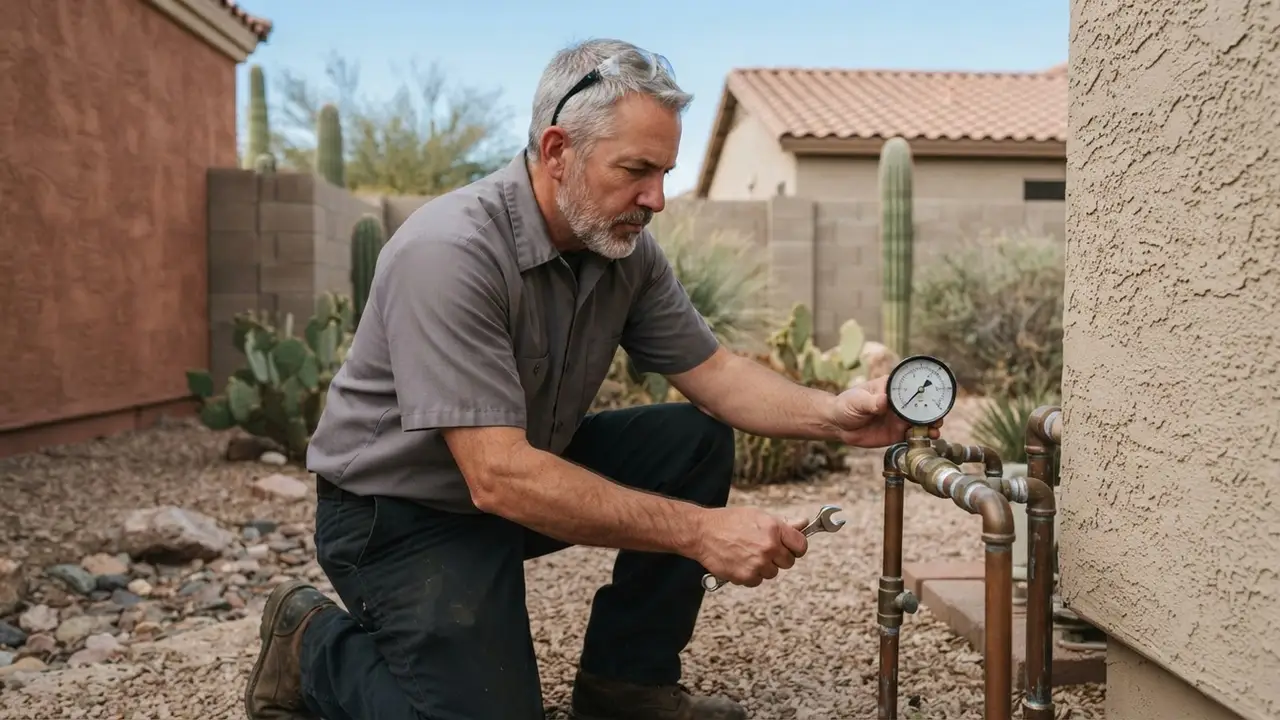
- Know your water pressure. Anything over 80 PSI stresses every fitting in the house. A $25 gauge on a hose bib tells you in 30 seconds.
If you are in a 1950s to 1970s ranch home in an older central Phoenix neighborhood, add a camera inspection of your main drain line every few years. Cast iron has a service life, and it does not announce when it is done. We do a lot of hydro jetting service Phoenix AZ work in those homes to clear the scale and grease that builds up before a full blockage.
Frequently Asked Questions
What should I do first in a plumbing emergency in Phoenix AZ?
Shut off the water at the fixture valve or the main, then cut power to any flooded area. Do both within the first 60 seconds. After that, contain the water, take photos, and call a licensed plumber. Stopping the supply is always step one.
How do I shut off my water main in Phoenix, Arizona?
Find the homeowner's valve between the meter box and the house - usually a ball valve or round gate valve. Turn it clockwise until it stops. If it will not close, use the city meter valve at the curb with a meter key, or call Phoenix Water.
Who do I call for a plumbing emergency in Phoenix AZ?
Call a state-licensed plumbing contractor that answers 24/7. Phoenix On Call Plumbing handles burst pipes, slab leaks, main-line backups, and water heater failures across the metro at (623) 260-3130. For a gas smell, call Southwest Gas first from outside.
How can I prevent plumbing emergencies in Phoenix?
Exercise your shut-off valves twice a year, flush the water heater annually, insulate exposed pipes before December, and watch your water bill for unexplained spikes. A $25 pressure gauge and a $30 anode rod prevent most of the failures we see.
How much does an emergency plumber cost in Phoenix in 2026?
Typical 2026 pricing in the Phoenix metro runs $150 to $350 for the after-hours service call and diagnosis, with repairs quoted on top - a burst line repair often lands $400 to $1,200, and a main-line drain clearing $250 to $600. We quote upfront before any work starts.
Get Help with Emergency Plumber in Phoenix
Water is moving right now, or it is not - those are the only two states that matter. If it is moving, shut the main, cut the power, and call us. Our team is on call 24 hours a day across Phoenix, and we will tell you on the phone exactly what to do while we are on the way.
Call Phoenix On Call Plumbing at (623) 260-3130 for Emergency Plumber Phoenix AZ service, day or night.