10 Common Plumbing Emergencies and How to Handle Them
From burst pipes to failed water heaters, here are the 10 most common plumbing emergencies in Phoenix AZ and exactly how to handle each one before help arrives.
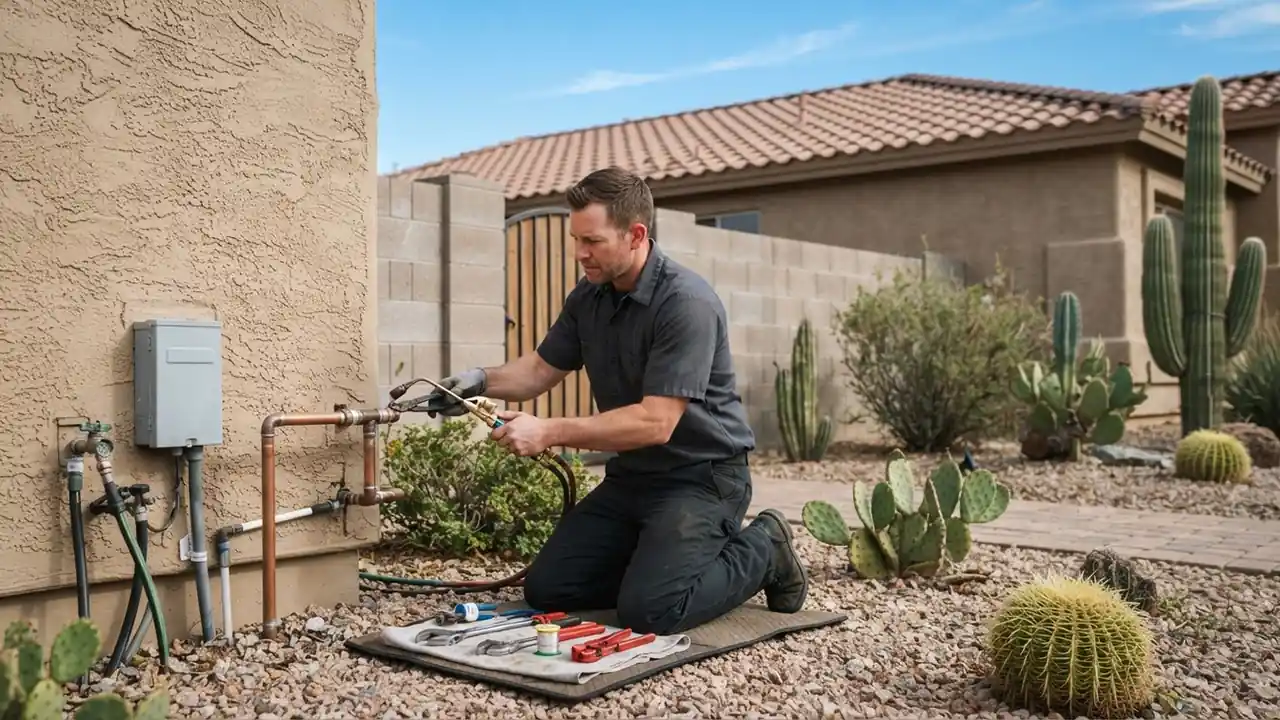
The 10 most common plumbing emergencies in Phoenix AZ are burst pipes, water heater failures, clogged drains, water line leaks, gas leaks, running toilets, sewer backups, slab leaks, frozen pipes, and failed pressure regulators. Knowing how to shut off water, isolate the problem, and who to call turns a five-alarm panic into a manageable repair. This guide walks through each one with the specific steps we use on calls across the Valley every week.
Common plumbing emergencies Phoenix AZ is really a list of the same handful of failures repeating across every neighborhood - from 1950s ranch houses in Encanto to new builds in Desert Ridge. The plumbing ages differently, but the failure modes are predictable. Here is what to do when one hits your house.
What Are the Most Common Plumbing Emergencies in Phoenix AZ?
Phoenix plumbing emergencies are urgent failures that stop water, flood a room, or create a safety hazard - and they cluster around extreme heat, hard water, and the monsoon season. Our dispatch board in October 2026 shows the same top five week after week: burst pipes, dead water heaters, backed-up drains, water line leaks, and gas leaks. The desert climate accelerates every one of them.
Three local factors drive most of the calls:
- Hard water. Phoenix water runs 12-18 grains per gallon of hardness, which scales up water heaters and narrows pipes from the inside.
- Heat and thermal expansion. Supply lines bake in 150°F attics and crack after years of expansion and contraction.
- Monsoon season. From July through September, sudden storms push tree roots into sewer laterals and overwhelm older drainage.
If you want a single number to memorize, it is this: shut off the main water valve first, ask questions second. Every minute of flowing water costs you $50-$150 in water damage remediation. The rest of this post covers each emergency in order, with the exact steps we take.
1. Burst or Broken Pipes
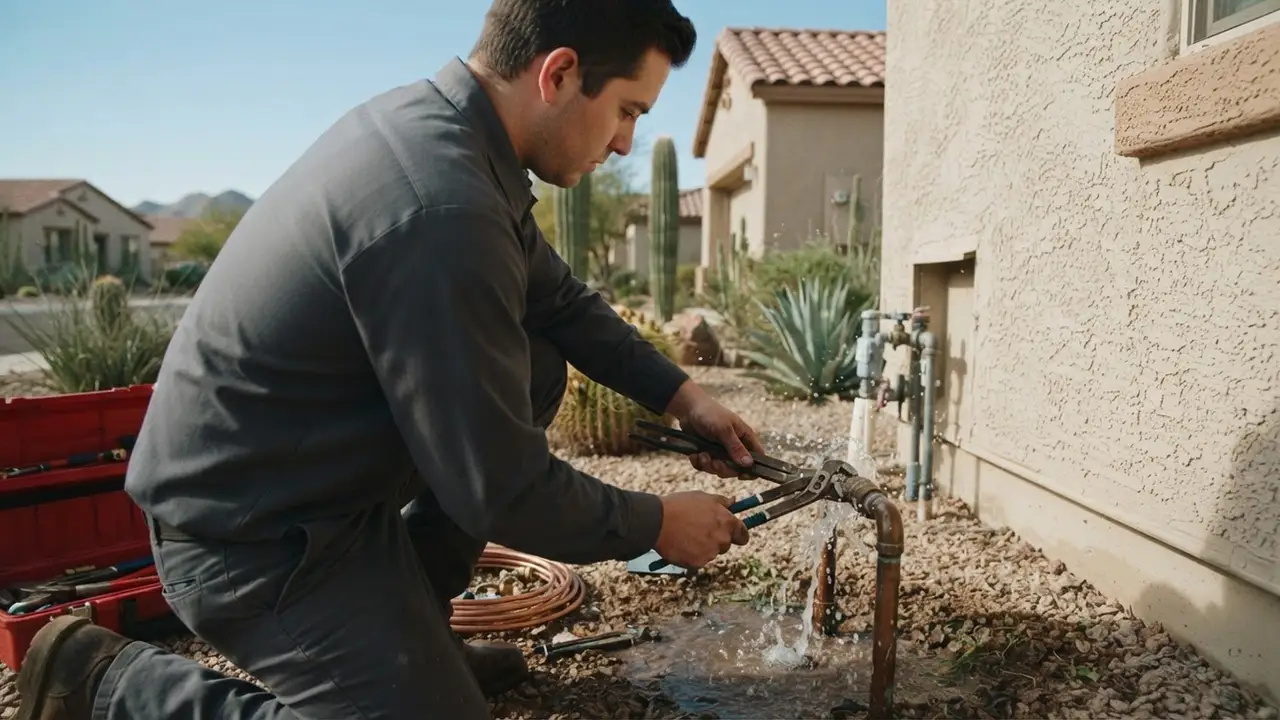
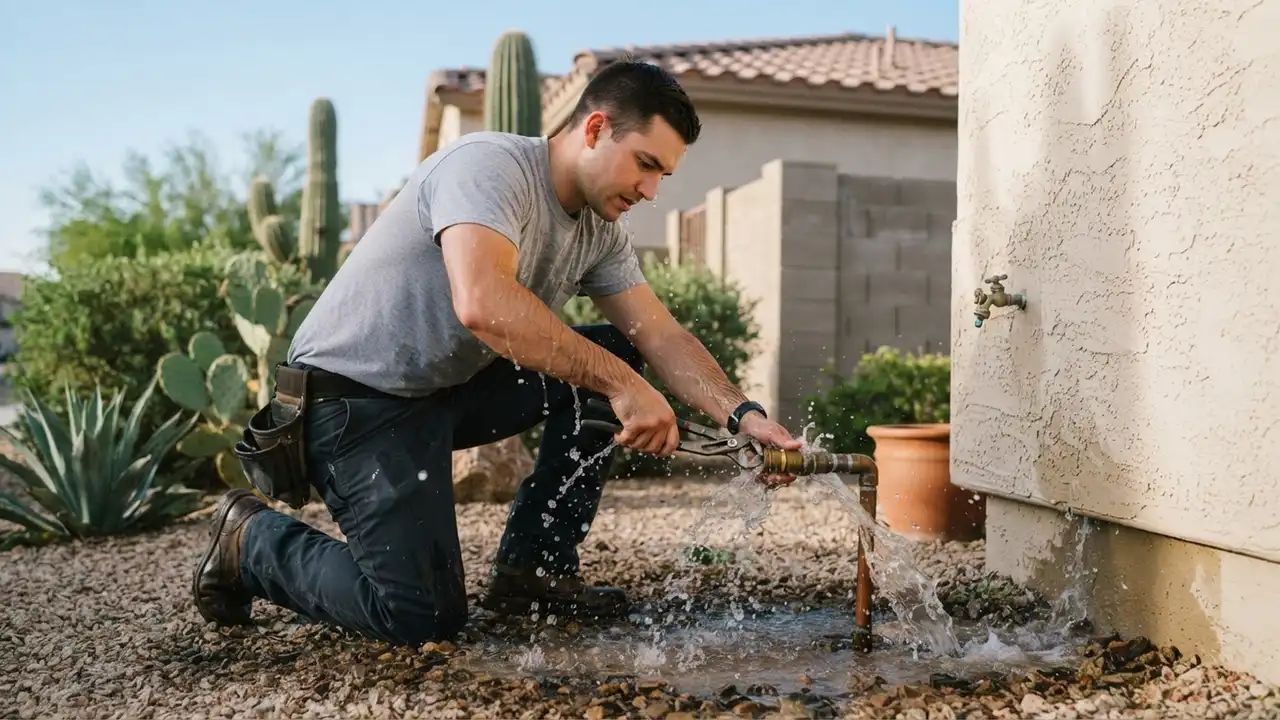
A burst pipe is the most destructive plumbing emergency in Phoenix because it dumps hundreds of gallons into your walls and floors within minutes. Copper lines in homes built before 1990 and polybutylene lines in 1980s subdivisions are the usual suspects. When a pipe lets go, you have about 60 seconds to act before drywall starts wicking water.
Here is how to handle a burst pipe in Phoenix, Arizona:
- Shut off the main water valve - usually at the street or on the side of the house near the hose bib.
- Open the lowest faucet in the house (a hose bib or tub) to drain remaining pressure.
- Kill power to any room with standing water at the breaker panel.
- Call for burst pipe repair Phoenix AZ - this is not a DIY fix once the wall is wet.
We see burst pipes most often in late spring and early summer, when attic temperatures swing 60°F between day and night. A pinhole leak becomes a split seam fast. If your home is older than 30 years and you have never had the supply lines inspected, that is the single highest-value preventive call you can make.
2. Water Heater Failure
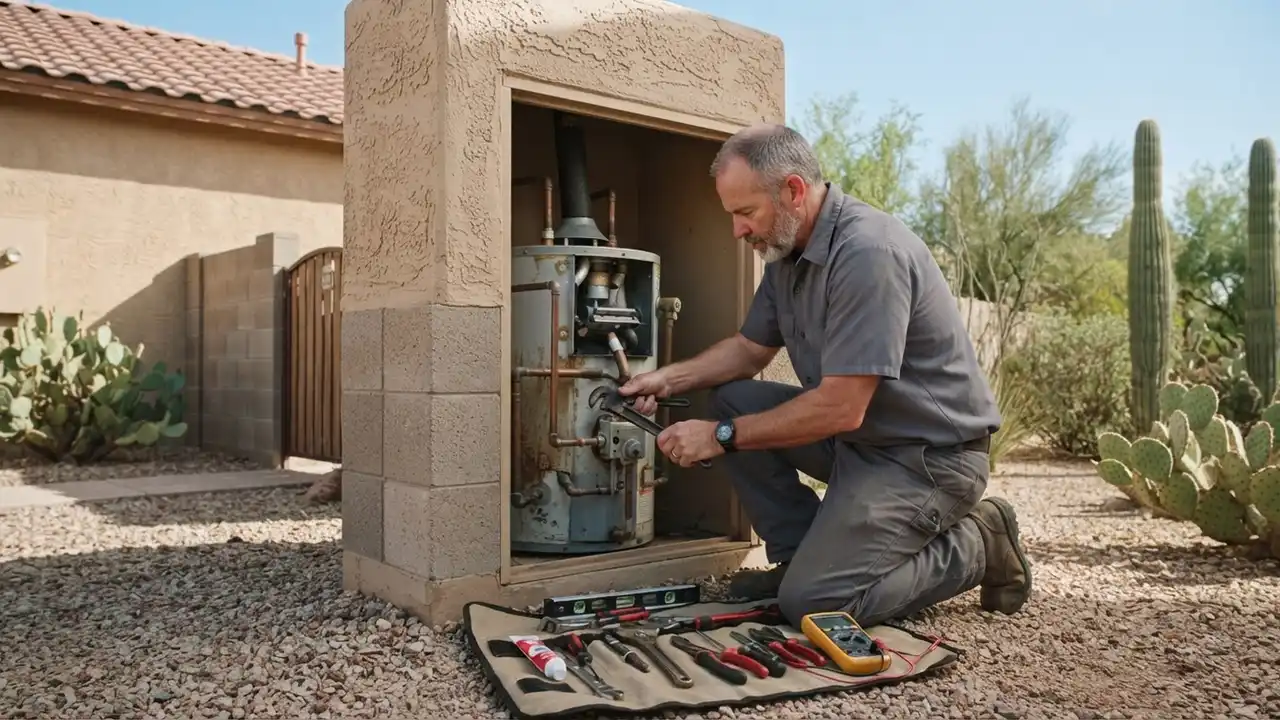
A failed water heater announces itself three ways: rusty or metallic-smelling hot water, popping and rumbling from the tank, and a puddle forming at the base. In Phoenix, hard water cuts a tank's lifespan to 8-10 years instead of the 12-15 you would get in softer-water cities. When it goes, you are looking at cold showers and, if the tank ruptures, a flooded garage or closet.
What to do:
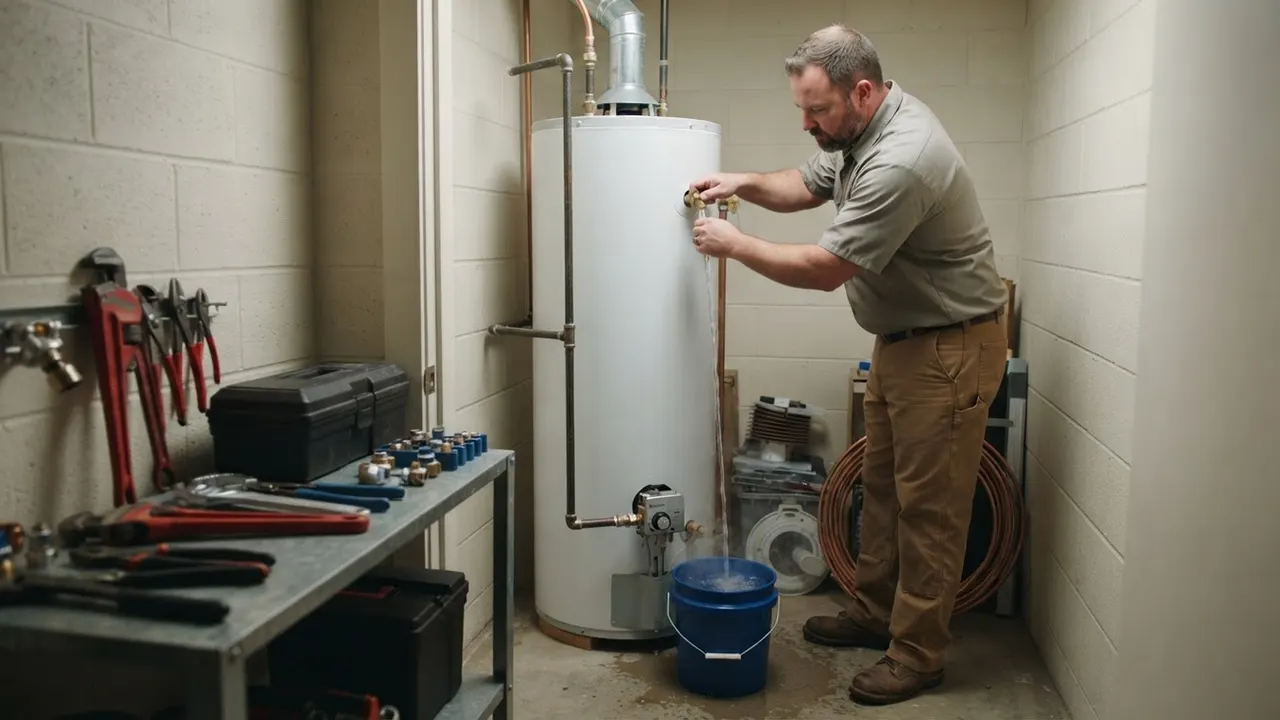
- Shut off the cold-water inlet valve on top of the tank.
- For gas units, turn the gas control to "pilot" or "off." For electric, flip the breaker.
- Attach a garden hose to the drain valve and run it to a floor drain or outside.
- Call for water heater repair Phoenix AZ the same day - a leaking tank rarely gets better.
Typical 2026 pricing in the Phoenix metro runs $150-$400 for a repair like a heating element or thermocouple, and $1,200-$2,800 for a full tank replacement depending on size and fuel type. Tankless units cost more upfront but last 20 years with annual descaling - which matters a lot in our water.
3. Clogged or Overflowing Drains
A drain that backs up into a shower or tub is the most frequent plumbing problem Phoenix homeowners call about, and it is almost always grease, hair, or tree roots. Kitchen sinks clog from cooking oil that solidifies in cool drain lines. Bathroom drains clog from hair and soap scum. Main sewer lines clog from roots - and Phoenix has plenty of them, especially ficus and mesquite.
If only one fixture is slow, start with a plunger and a drain snake. If multiple fixtures back up at once, the blockage is in the main line and you need drain cleaning Phoenix AZ with a camera inspection. Do not pour chemical drain cleaner down a fully blocked line - it sits in the standing water, damages older pipes, and can splash back on you.
For recurring clogs, especially in homes built before 1985 with cast iron or Orangeburg sewer lines, hydro jetting clears the pipe wall back to bare metal instead of just poking a hole through the clog. That is the difference between a drain that stays clear for two months and one that stays clear for two years.
4. Water Line Leaks
A water line leak between the meter and the house is easy to miss because the evidence is often underground. The tell is a water bill that jumps 20-40% with no change in usage, or a wet patch in the yard that stays green when everything else is brown. Phoenix soil shifts with our dry-wet cycles, and that movement cracks older galvanized and copper service lines.
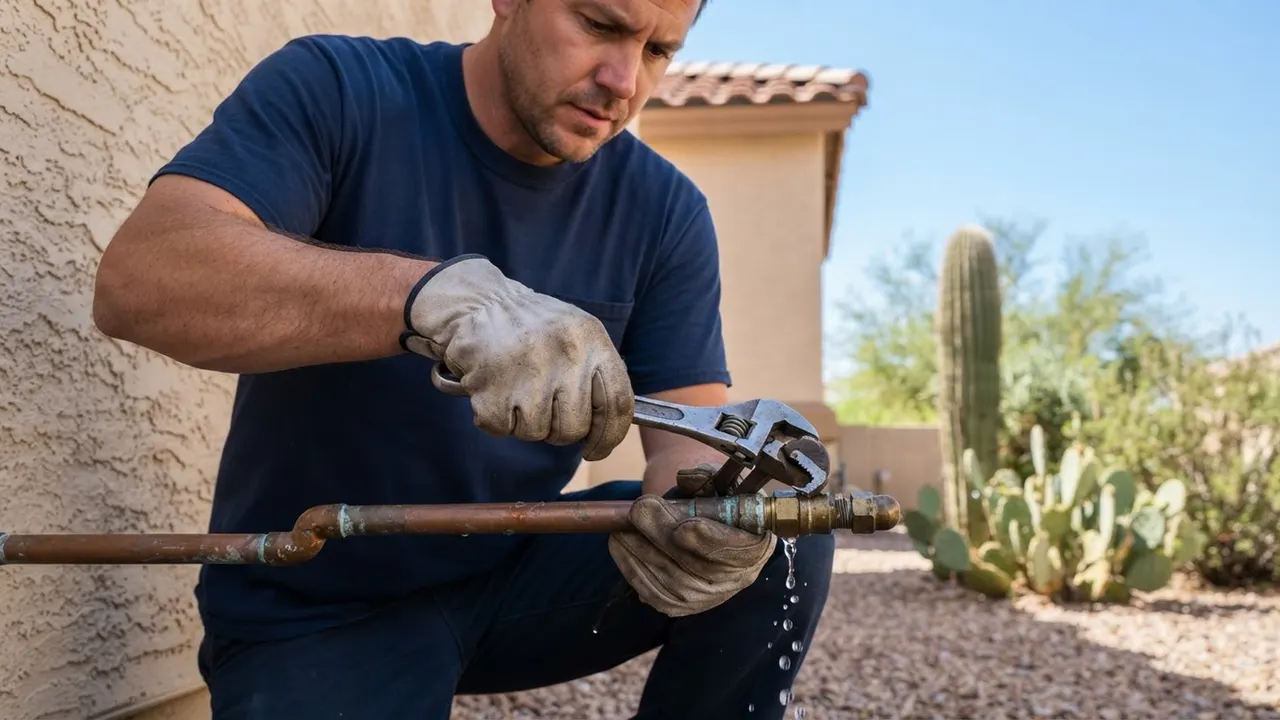
First, confirm it is a leak and not a running toilet. Shut every fixture in the house, then watch the leak indicator on your water meter - if it spins, you have a leak. Call for water line leak repair Phoenix AZ before the water undermines your foundation or driveway. We locate the break with acoustic and tracer-gas equipment, dig one hole instead of five, and pressure-test the repair before we backfill.
5. Gas Leaks
A gas leak is the one plumbing emergency where you do not troubleshoot - you evacuate. If you smell rotten eggs, hear a hiss near a gas appliance, or your carbon monoxide detector goes off, get everyone out of the house and call 911 and Southwest Gas from outside. Do not flip light switches, do not use your phone inside, do not start a car in the garage.
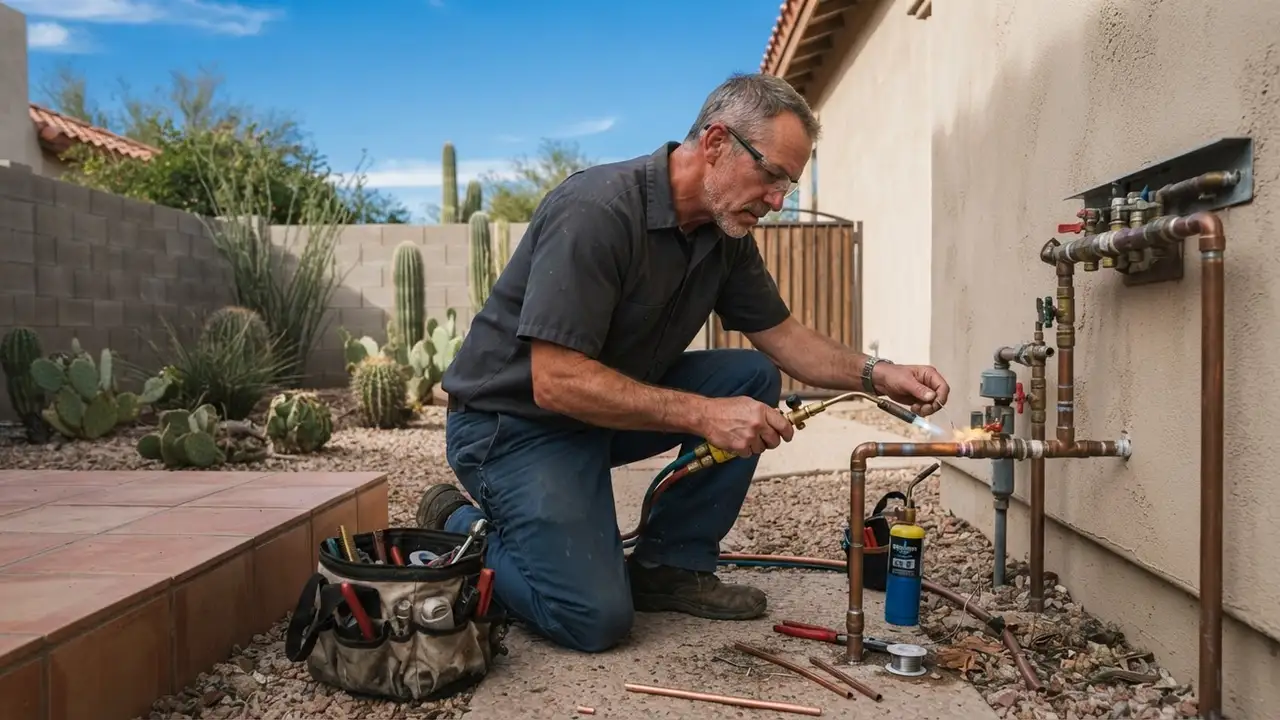
Once the utility makes the scene safe, the repair is on us. We handle gas leak repair Phoenix AZ with a combustible gas detector, pressure-test every joint we touch, and pull the permit required by the City of Phoenix before we relight anything. A gas leak is never a wait-until-Monday problem.
6. Running or Leaking Toilets
A running toilet wastes 200 gallons a day - that is 6,000 gallons a month on your bill, and it is the most common cause of a mystery water spike we see. The fix is usually a $15 flapper or fill valve, and it takes 20 minutes. A leaking toilet at the base is different: that is a failed wax ring, and it will rot the subfloor if you ignore it.
Shut the supply valve behind the toilet, flush to empty the tank, and sponge out the rest. If the water is coming from the base rather than the tank, stop using the toilet and get it repaired - subfloor damage in a Phoenix home runs $800-$2,500 once you factor in tile and framing.
7. Sewer Line Backups
A sewer backup is a health hazard, not just a mess. If sewage is coming up in your lowest drain - usually a shower or floor drain - stop using all water in the house immediately. Every flush sends more waste into the backup.
What to do:
- Stop all water use.
- Keep kids and pets away from the affected area.
- Do not run the washing machine or dishwasher.
- Call for emergency service - this needs a camera inspection and likely hydro jetting or a spot repair.
Root intrusion is the number-one cause in Phoenix, followed by collapsed cast iron in mid-century neighborhoods. If your home is in a historic district with original sewer lines, an annual camera inspection in spring saves you a summer disaster.
8. Slab Leaks
A slab leak is a water line leaking under your foundation, and Phoenix is slab-leak country because so much of our housing stock sits on post-tension concrete. Signs include hot spots on the floor, the sound of running water when nothing is on, unexplained moisture at the base of a wall, and a water bill that climbs month over month.
Do not ignore a slab leak hoping it stops. It will not, and it undermines the soil under your foundation. We use leak detection Phoenix AZ with acoustic listening and thermal imaging to pinpoint the break within inches, then reroute or repair the line with minimal concrete cutting. Most slab leak repairs are done in a single day.
9. Frozen Pipes (Yes, in Phoenix)
Phoenix does freeze - the Valley drops below 32°F a handful of nights each winter, usually in December and January. Exposed pipes in attics, garages, and along north-facing exterior walls are the ones that split. The damage is not the freeze itself; it is the thaw, when water starts pouring out of a cracked line.
If you suspect a frozen pipe, open the nearest faucet so melting water has somewhere to go, and warm the pipe with a hair dryer or towels soaked in hot water. Never use an open flame. If the pipe has already split, shut off the main and call for help. A one-night freeze can turn into a $4,000-$12,000 water damage claim if you are not home when it thaws.
10. Failed Sump Pumps and Pressure Regulators
Two less-obvious emergencies round out the list. A failed sump pump - rare in Phoenix but present in homes with basement conversions or low-lying lots - floods during monsoon. A failed pressure regulator lets street pressure spike into your house, and Phoenix municipal pressure can hit 120 psi, which is enough to blow supply lines and shorten every appliance's life.
If your water pressure suddenly feels like a fire hose, or you hear banging in the walls when a faucet closes, that is a regulator problem. Normal household pressure is 40-60 psi. Anything above 80 psi needs a plumber the same week.
Common Mistakes to Avoid During a Plumbing Emergency
The mistakes that turn a $300 repair into a $3,000 repair are almost always the same. Here is what not to do:
- Don't wait to shut off the water. The main valve is the first move, not the last.
- Don't pour chemical drain cleaner into a fully blocked line. It pools, damages pipes, and can burn you on splashback.
- Don't run a plunger on a chemical-filled drain. You will splash caustic liquid into your eyes.
- Don't ignore a gas smell. Evacuate first, diagnose never.
- Don't reset a tripped water heater breaker repeatedly. If it trips twice, the element or tank is failing.
- Don't put off a slab leak. Foundation damage is permanent and expensive.
Label your main shut-off valve today. In an emergency, you will not want to be searching for it in the dark.
When to Call a Professional
Call a professional the moment water is where it should not be, gas is where it should not be, or a repair involves opening a wall, cutting concrete, or touching a gas line. Those are the lines we do not cross as DIY. For everything else - a slow drain, a running toilet, a dripping faucet - a confident homeowner can handle it with basic tools.
When you do call, we want you to reach a real dispatcher, not a voicemail. Phoenix On Call Plumbing is a state-licensed plumbing contractor serving the Valley around the clock, and our technicians arrive with the parts to finish most repairs on the first visit. We quote the price before we start, and we clean up before we leave.
Frequently Asked Questions
What are the most common plumbing emergencies in Phoenix AZ?
The top five are burst pipes, water heater failures, clogged main drains, water line leaks, and gas leaks. Hard water, extreme attic heat, and monsoon-season root intrusion drive most of them. Together they account for roughly 80% of the emergency calls we run in the Valley.
How do I handle a plumbing emergency in Phoenix, Arizona?
Shut off the main water valve first, then kill power to any flooded area, then call for help. For gas, evacuate and call 911 from outside. The first 60 seconds of action determine whether you are looking at a repair or a restoration job.
Which plumbing problems need emergency repair in Phoenix AZ?
Anything involving active water flow, sewage backup, or gas. That includes burst pipes, slab leaks, sewer backups, gas leaks, and a water heater that is actively leaking from the tank. Slow drains and dripping faucets can wait for a scheduled visit.
How can I avoid common plumbing emergencies in Phoenix?
Flush your water heater annually to fight hard-water scale, install a pressure regulator if you do not have one, camera-inspect your sewer line every 1-2 years, and know where your main shut-off valve is. Those four habits prevent the majority of the calls we run.
Does homeowners insurance cover plumbing emergencies in Phoenix?
Most policies cover the water damage from a sudden burst pipe but not the pipe repair itself, and they rarely cover slab leaks or gradual leaks. Document everything with photos before cleanup and call your insurer the same day. Your plumber handles the repair; the insurer handles the damage.
Get Help with Emergency Plumber in Phoenix
When water is running where it should not, you need an Emergency Plumber Phoenix AZ who answers the phone at 2 a.m. and shows up with the parts to finish the job. Phoenix On Call Plumbing handles burst pipes, water heaters, drains, gas lines, and slab leaks across the Valley - every day of the year.
Call (623) 260-3130 now and we will dispatch a licensed technician to your door.