
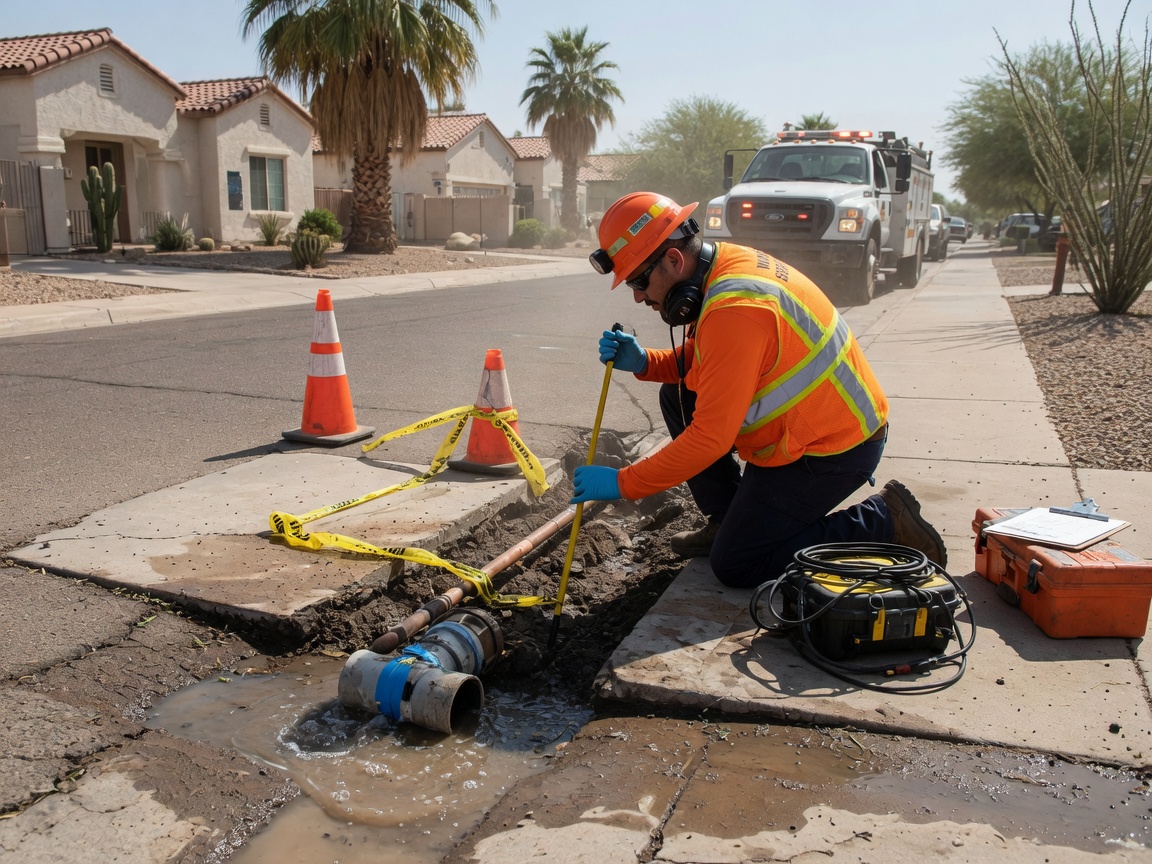
Phoenix homes built before 1990 in neighborhoods like Arcadia and Biltmore often have galvanized or early copper lines that corrode faster under extreme summer heat. When a leak stays hidden behind walls or under slabs, the 110-plus degree days accelerate mold growth and slab shifting in Maricopa County soil. We use acoustic sensors and thermal imaging first so we avoid cutting into finished surfaces unless we confirm the exact spot.
Desert temperature swings cause copper and PEX joints to expand and contract daily, creating pinhole leaks that surface weeks later in places like Camelback East or South Mountain. Main-line leaks near Papago Park frequently involve deeper clay soils that retain moisture and complicate excavation. Our techs isolate the leak zone with pressure testing before any digging begins, keeping disruption limited to one access point.
Water pressure in older Ahwatukee and Maryvale tracts can spike after city valve work, turning small drips into active flows inside walls. We carry temporary bypass kits so residents in Tempe or Mesa can keep water service while we finish detection. Every job ends with a written map of the line and a recommendation for the least-invasive repair route.
Scottsdale and Mesa customers often call after noticing warm spots on tile floors near water heaters or laundry rooms. We cross-check meter flow against fixture isolation to rule out irrigation valves before declaring a plumbing leak. This step prevents unnecessary wall or slab work in homes where the real issue sits outside the foundation.
Technician insight
In Phoenix the thing that catches most people out with Emergency Leak Detection is how fast a small pinhole in 1970s copper turns into slab damage once summer heat pushes the line past 120 degrees. Homeowners in Ahwatukee and Maryvale often chase the wrong fixture because they never isolate the main first. We always start at the meter.
Hidden Slab Leak in Arcadia
A homeowner in Arcadia noticed warm tile near the kitchen island after a week of 112-degree days. Meter flow stayed elevated with all fixtures off. We isolated the cold line, ran acoustic scanning, and found the leak under the slab two feet from the island. One 12-inch access cut allowed epoxy repair and the floor was restored the same afternoon.
Emergency Leak Detection Services We Offer
✓Slab Leak Detection
Pinpoint leaks under concrete slabs common in older Arcadia and Biltmore homes using acoustic and thermal tools without major demolition.
✓Main Water Line Leak Detection
Locate leaks on the service line from the meter to the house, frequent after soil movement in South Mountain and Maryvale tracts.
✓Fixture and Appliance Leak Isolation
Test toilets, sinks, water heaters, and washing machines to confirm whether the leak originates inside the home or in the supply line.
✓Underground Irrigation and Supply Leak Detection
Separate irrigation valve leaks from domestic lines, a common mix-up in Ahwatukee and Camelback East properties with separate meters.
✓Hidden Pipe Leak Detection Behind Walls
Use moisture meters and cameras to find leaks inside walls or ceilings before drywall removal in multi-story homes near Chase Field.
Emergency Leak Detection Cost in Phoenix, AZ
| Service | Typical Range | What Affects It |
|---|---|---|
| Initial Leak Detection Visit | $175–$350 | Includes pressure isolation and electronic scanning; higher in multi-story or slab-on-grade homes in Arcadia. |
| Slab Leak Confirmation | $250–$450 | Adds thermal imaging and small test access when meter flow indicates underground loss. |
| Main Line Leak Location | $200–$400 | Covers tracing from meter to foundation; extra for deeper digs near Papago Park clay soils. |
Ranges are typical for Phoenix, AZ and confirmed with an exact written quote before any work starts.
How it works
- 1
Initial Phone Assessment
We ask about meter movement, visible water stains, and which neighborhoods are affected so we bring the right equipment on the first trip.
- 2
On-Site Pressure Isolation
We shut off sections of the system and monitor pressure drops to narrow the leak to a single zone before any scanning begins.
- 3
Electronic and Thermal Scanning
Acoustic sensors and infrared cameras trace the line through slab or soil while we mark the surface for minimal excavation.
- 4
Verification and Report
We confirm the leak with a small test hole if needed, then provide a written diagram and repair options before leaving the property.
Pricing
Upfront quote given after the isolation test; most detection calls fall between $175 and $450 before any repair work.