
2026-09-20 ·
What Causes Sewer Backups in Phoenix Homes?
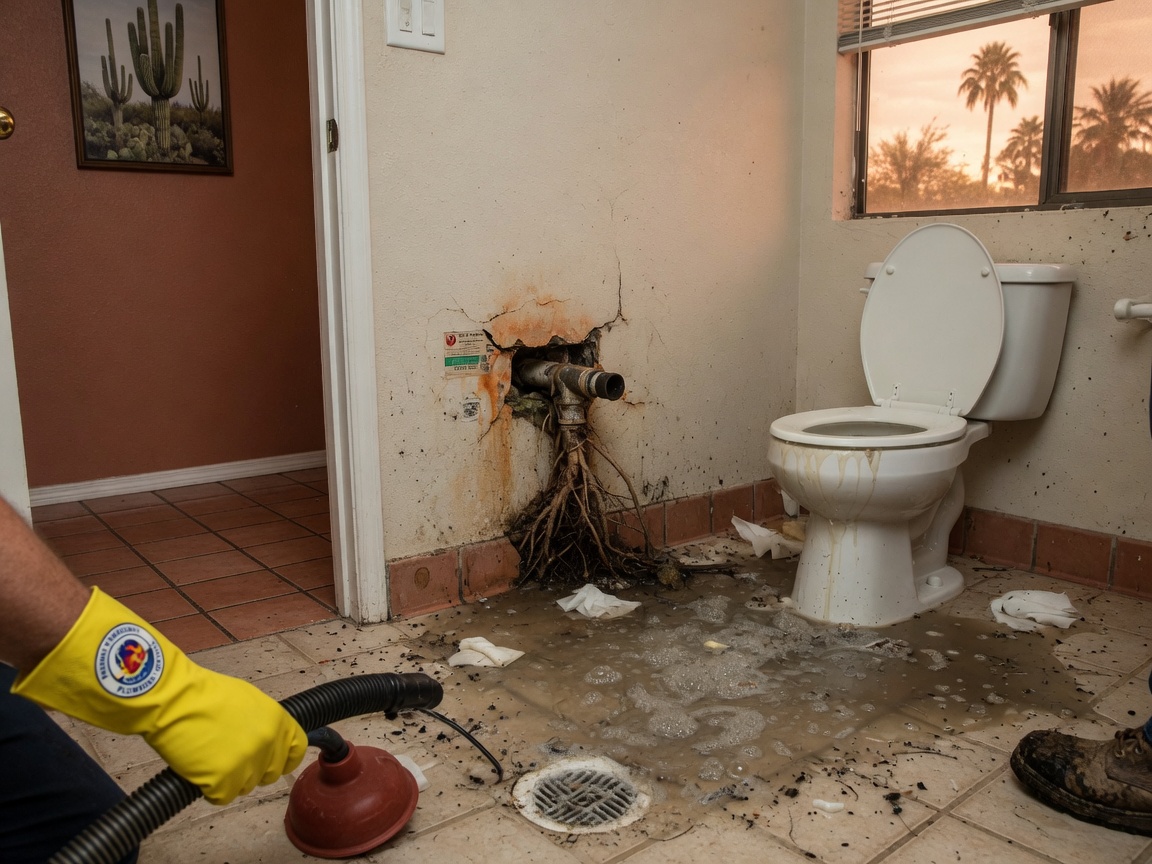
Sewer backups in Phoenix homes most commonly result from tree roots invading aging clay or cast-iron lines, combined with grease accumulation and monsoon debris that overwhelms drainage systems. These issues appear frequently in neighborhoods such as Arcadia and Biltmore where homes built in the 1950s and 1960s still rely on original sewer laterals. Extreme summer heat in the hot desert climate can accelerate pipe corrosion while rare but intense monsoon rains push sediment and roots into main lines across Maricopa County.
Tree Root Intrusion from Local Vegetation
Phoenix yards often feature trees whose roots seek moisture from sewer pipes, especially in areas like Camelback East and South Mountain. Roots from mature palms, mesquite, and citrus trees penetrate joints in clay pipes common to 1950s-1970s homes in Arcadia and Maryvale. Once inside, roots expand and trap debris, creating complete blockages within months during the dry season when roots aggressively search for water. Homeowners in these neighborhoods notice slow drains first in lower fixtures before full backups occur. Soil conditions with low moisture retention push roots deeper toward sewer lines running 8-12 feet underground. Regular hydro jetting clears roots temporarily but does not address underlying pipe damage that allows re-entry.
Aging Pipes in Established Neighborhoods
Many homes in Biltmore, Arcadia, and Ahwatukee still use original cast-iron or clay sewer lines installed 50-70 years ago that corrode or crack under Phoenix's shifting soils. Maricopa County's alkaline soils and occasional ground movement from extreme temperature swings stress these materials, leading to offsets at joints where roots or debris enter. Nearby cities like Scottsdale and Tempe report similar patterns in their older subdivisions where cast iron degrades faster due to hydrogen sulfide gas from standing waste. Slab foundations common in these areas make repairs more invasive once backups reach living spaces. Pipes in Maryvale developments from the 1960s show higher failure rates because they were installed before modern PVC standards. Inspection with camera equipment reveals these defects before they cause repeated backups.
Grease, Debris, and Monsoon Effects
Cooking grease poured down drains solidifies in cooler underground pipes and combines with monsoon sediment to form stubborn clogs across Phoenix. Summer temperatures above 110 degrees keep grease liquid longer until it reaches the main line, then hardens during cooler nights. Monsoon rains wash leaves, dirt, and construction debris from streets in Camelback East and Papago Park areas into storm drains that sometimes connect or overflow into sanitary sewers. Homes near the Phoenix Zoo and Desert Botanical Garden see increased backups after storms because landscape runoff carries extra organic material. Flushing wipes or paper products compounds the problem in older Maryvale and South Mountain properties with narrower 4-inch lines. These seasonal factors turn minor buildup into full backups within hours.
Practical Steps for Phoenix Homeowners
Camera inspections identify root entry points and pipe condition before backups repeat in neighborhoods like Arcadia. Hydro jetting removes grease and roots effectively in most Maricopa County homes when performed before lines collapse. Linking to related guidance helps residents prepare: read What to Do Before an Emergency Plumber Arrives in Phoenix for immediate actions. For persistent issues, Emergency Sewer Repair addresses damaged laterals while Sewer Backup Cleanup handles resulting water damage. Checking cleanouts regularly in Ahwatukee and Biltmore prevents surprises during monsoon season. Understanding these local causes reduces emergency calls to Phoenix Emergency Plumbers serving 24/7 across surrounding areas including Tempe and Mesa.